
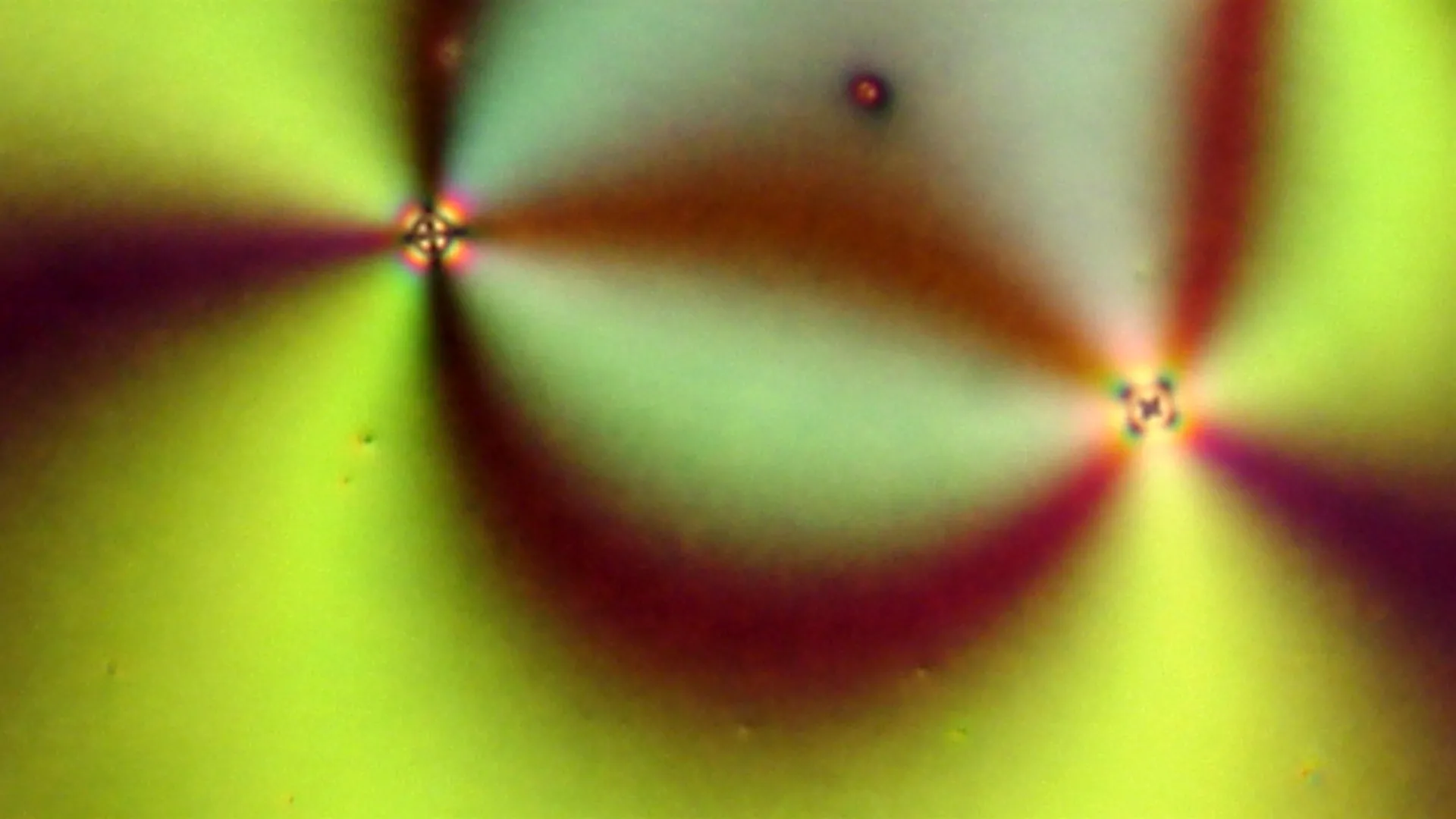
Today, this surrogate approach reframes pattern formation as a data-to-field prediction task, bypassing slow time-stepping in favor of direct mapping from training data to the full molecular alignment field and defect map. The engine is a 3D U-Net trained on a rich dataset of simulations and lab measurements, delivering predictions in milliseconds.
Crucially, the model reproduces both numerical simulations and experimental results, and it handles the tricky merging and splitting of defects—behaviors that stymie conventional methods. This is part of a broader wave of AI-driven science acceleration that is reshaping how researchers explore design spaces. According to ScienceDaily, the approach represents a thousand-fold speedup over traditional workflow, while a companion report in Small Journal highlights its ability to generalize beyond a single system.
A New Design Language Emerges
Beyond raw speed, the surrogate provides a new design language: researchers can test a multitude of defect scenarios rapidly, then funnel the most promising candidates back into high-fidelity simulations and experiments. This capability lowers barriers to exploring extreme or hybrid patterns that were previously impractical to probe, enabling faster iteration cycles across sectors that rely on pattern formation.
How It Works: The Surrogate Engine
The model learns to map the 3D orientation field and defect topology directly from data, skipping time-consuming PDE-solvers and leveraging data-driven priors. It delivers results that match high-fidelity simulations and lab measurements, including the emergence and evolution of merging and splitting defects. The practical upshot is a dramatic reduction in compute cost and an ability to search larger design spaces without sacrificing fidelity.
Where It Takes Us Next
Experts anticipate that this surrogate strategy will generalize to other pattern-forming systems, from metamaterials to biological pattern formation, unlocking rapid prototyping and discovery across disciplines. The work aligns with a broader trend in AI-assisted science that couples data, models, and experiments to accelerate insight.
In Prof. Na’s lab, the blue glow of LEDs frames a future in which researchers write design rules in software, not just in algebra. The era of brute-force design is ending; AI-enabled materials discovery is the new normal.
Related Insight
Microplastics disrupt ocean carbon capture, weakening a natural system that helps slow climate change.
Read the full story →