
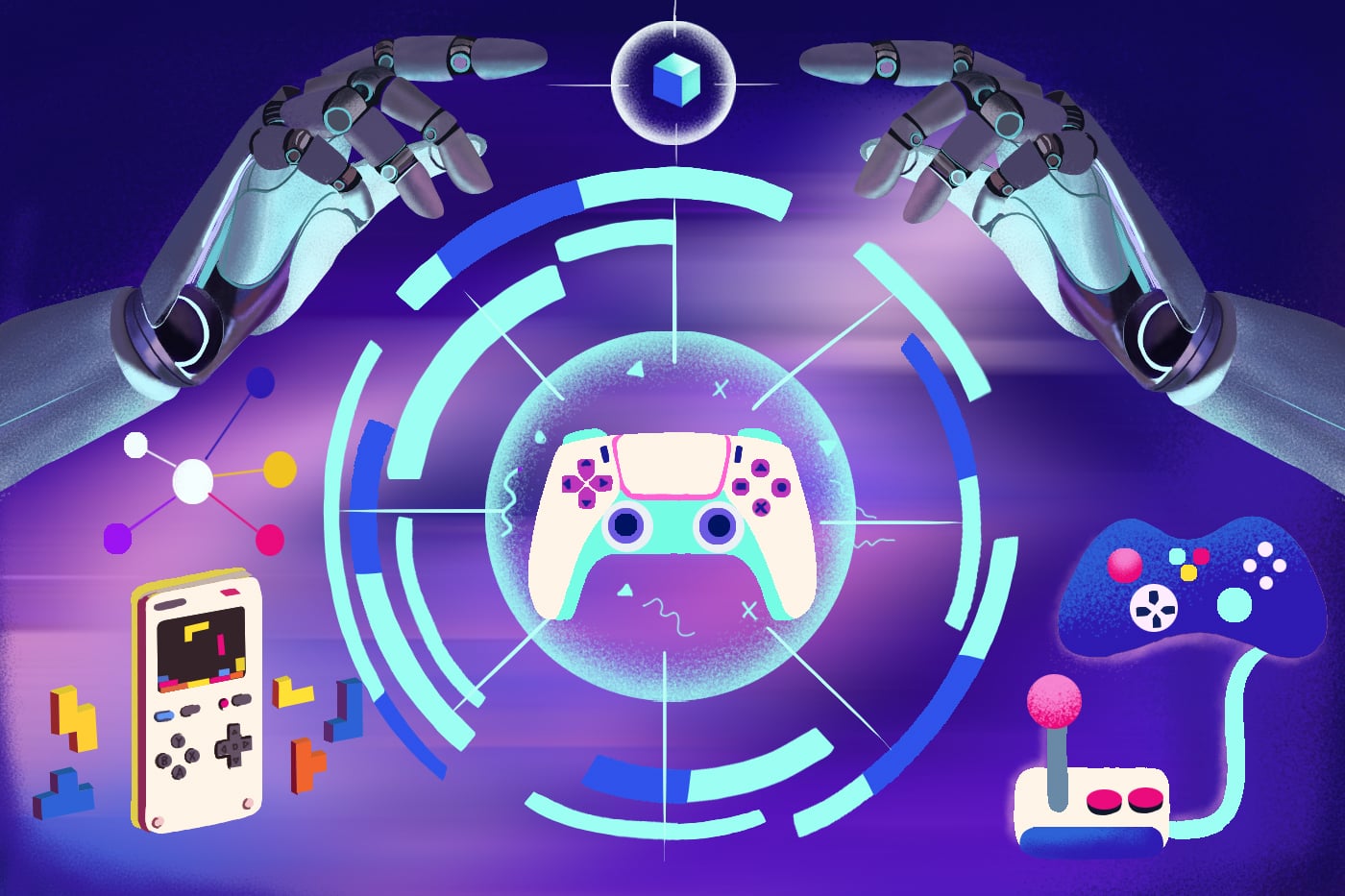
The gaming world is changing fast. Not slowly, like seasons shifting — but in bursts, experiments, and sudden “did-you-see-that?” moments. Artificial intelligence is no longer a background tool; it’s becoming a core collaborator for creators and a quiet concierge for players. That’s true both for traditional video games and the regulated, fast-moving world of iGaming.
Smarter worlds, not just prettier graphics
AI helps build worlds that feel lived-in. Procedural generation used to mean repeating patterns; today, machine learning can craft environments, quests, and music that react to a player’s choices in ways that feel personal. NPCs behave with more believable motives. They don’t just follow scripts; they adapt, remember, and — sometimes — surprise you. For developers this reduces repetitive design work, and for players it increases immersion in a very tangible way.
Personalization and retention: the invisible hand
Ever wonder why a game starts suggesting challenges that suit you? That’s recommendation engines and behavioral models at work. In iGaming, personalization is especially potent: AI tailors offers, bonuses, and game suggestions to players’ habits while monitoring patterns for signs of problem gambling. The result is higher engagement, and — ideally — safer play when systems flag risky behavior early. It’s a mix of profit and responsibility, and the balance is tricky.
Fraud detection and compliance
iGaming operators face legal and financial risks daily. AI systems now scan transactions, identify suspicious patterns, and automate KYC (know-your-customer) checks. Machine learning models can detect bot play, collusion, or money-laundering faster than manual teams could, freeing humans to handle nuance and edge cases. That said, automated systems can be imperfect; they need good data and regular oversight to avoid false positives or biased decisions.
Development speed and creative tooling
Generative AI tools are speeding prototyping. Concept art, voices, and even dialogue drafts can be produced in hours instead of weeks. Smaller studios can punch above their weight. But there’s a caveat: quality control still matters. AI can propose ideas; humans choose, refine, and give context. The best outcomes come from this human-AI collaboration, not replacement.
New player experiences and fairness
AI-driven matchmaking and adaptive difficulty make multiplayer games fairer and more fun. Imagine joining a match that adapts to your skill curve without feeling condescending. Or AI referees that spot cheating in real time. In iGaming, fairness isn’t just desirable — it’s regulated. Consider the high stakes: AI could even monitor the integrity of a nationwide lottery drawing, or more routinely, ensure transparency in a simple spin of the roulette wheel or complex card games.
So, where are the limits?
AI raises questions about authorship, ethics, and jobs. Will storytellers be replaced? Will generated content dilute originality? Maybe. Or maybe AI will free creators to pursue more ambitious, soulful work. It will depend on policy choices, business incentives, and how engineers and designers hold it to account.
The next few years will be a noisy laboratory. Expect better NPCs, sharper fraud detection, and highly personalized experiences — alongside debates about transparency, data use, and creative ownership. If you’re a player, you’ll notice smoother, smarter games. If you’re a developer, you’ll get new tools and new responsibilities.
What do you think — exciting or alarming? Drop a comment and tell us whether you welcome AI into your games, or whether you want limits and guardrails first.