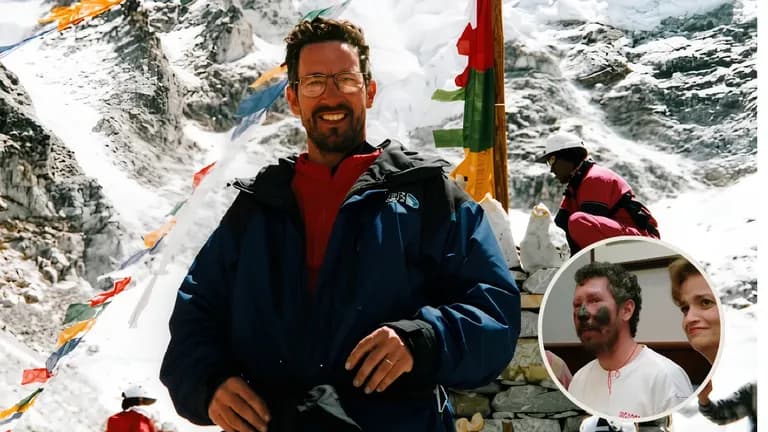
13 Years, 46,505 Miles, Zero Engines: The Guinness World Record Journey That Took Jason Lewis Around the World
For 13 years, Jason Lewis battled oceans, continents, and near-fatal setbacks to achieve a world first that still inspires adventurers today.
Picture yourself in the middle of the ocean. There is no engine noise, only the steady rhythm of your legs pushing pedals. Every mile forward comes from your own muscles. This is not a day trip or a summer challenge. For Jason Lewis, it was a mission that lasted 13 years and covered 46,505 miles.
In 2007, Jason became the first person in history to circumnavigate the globe using only human power. The Guinness World Records called it “a groundbreaking feat of endurance and planning”
Fast Facts
- Project: First human-powered circumnavigation of the Earth completed by Jason Lewis
- Timeline: 13 years of travel from 1994 to 2007
- Distance: 46,505 miles covered using pedal boat, bicycle, inline skates, kayak, walking
- Record: Recognized by Guinness World Records as the first human-powered global circumnavigation
- Why it matters: Proof that endurance, planning, and low-impact travel can achieve world-first results
Who Is Jason Lewis
Jason Lewis was born in Catterick, England, in 1967. By the early 1990s, he was not a famous athlete or a millionaire adventurer. He was a man with an idea that seemed almost impossible. Could someone travel all the way around the planet without using engines, sails, or even animal help?
In 1994, he launched a project called Expedition 360. The plan was to leave London, travel around the world, and return to the exact starting point. Every mile would be covered using only human-powered methods like cycling, skating, kayaking, walking, and pedaling a custom-built boat.
How the Journey Worked
Jason’s main vessel was a pedal-powered boat named Moksha, which means “freedom” in Sanskrit. The 26-foot craft was built at the Exeter Maritime Museum with the help of friends. It carried food, water, and gear for long ocean crossings. Instead of an engine, it used a propeller connected to pedals, much like a giant floating bicycle.
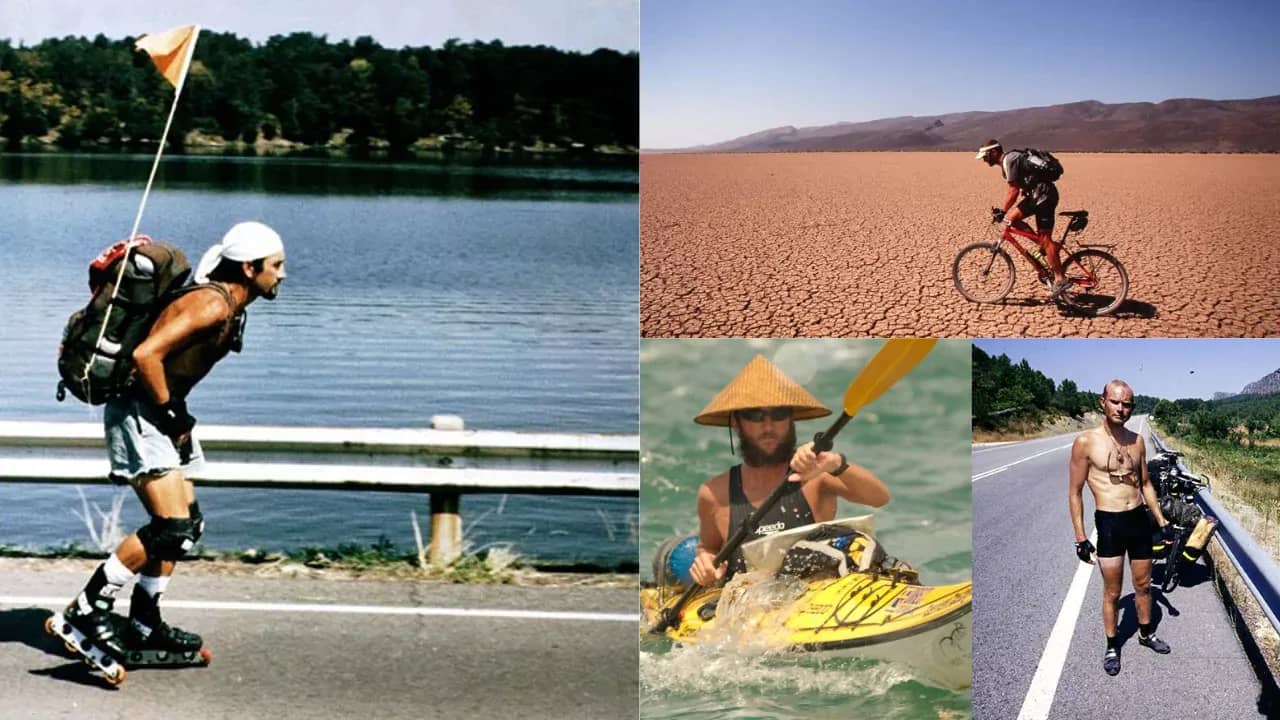
The route required him to meet strict circumnavigation rules. He had to cross the equator twice, pass through two points on opposite sides of the Earth, and keep a continuous path without skipping sections. To achieve this, Jason used:
- Bicycles for long road journeys.
- Inline skates to cross parts of the United States.
- Kayaks for coastal and river sections.
- His own two feet for walking and hiking when needed.
Challenges That Nearly Ended It All
This was not a smooth trip. In Colorado, a drunk driver hit Jason while he was inline skating. Both his legs were broken, and recovery took nine months.
In the tropics, he battled malaria and septicemia. Near Australia’s Great Barrier Reef, a crocodile bit his paddle while he was kayaking. Each incident could have ended the expedition. Instead, Jason adapted, recovered, and kept going.
Dr. Chris McDougall, an expert in human endurance from the University of Exeter, once said,
“Human-powered travel is not just about fitness. It is about resilience, problem-solving, and the will to keep moving when quitting feels easier.”
Read more : She Swam From Cuba to Florida: 110 Miles, 53 Grueling Hours, and Zero Protection From Sharks at Age 64
The Finish Line in London
On October 6, 2007, Jason pedaled Moksha down the Thames River and docked back in Greenwich, the very place he had started. His odyssey had lasted 13 years and spanned 46,505 miles across oceans, continents, and cultures.
Guinness confirmed his record as the first person to circumnavigate the world entirely under human power. The feat included 4,833 days of travel and more than 74,000 kilometers covered without using fuel.
Why This Story Still Inspires People Today
Jason’s journey continues to resurface on Reddit, YouTube, and adventure blogs. People share it because it is proof that you do not need the latest tech or a massive budget to achieve something historic. You need determination, a plan, and the patience to see it through.
His story also connects with the growing interest in sustainable travel. In a time when aviation emissions are under scrutiny, his zero-carbon journey feels even more relevant.
Could You Do This Too
For most people, a 13-year global trip is unrealistic. However, Jason’s methods can inspire smaller adventures. You could try a weekend kayak camping trip, a multi-day cycling route, or even a city-to-city inline skating challenge.
Jason shares detailed accounts, tips, and maps in his book trilogy The Expedition, as well as on the Expedition 360 website. These resources show how to plan and prepare for long-distance human-powered travel.
Legacy and Lessons
When asked why he took on the challenge, Jason said,
“The journey was not just about seeing the world. It was about proving that you can do more with less and that slowing down can make the experience richer.”
Interview on All That’s Interesting
His record is more than a personal achievement. It is a reminder that persistence, creativity, and a focus on sustainable living can lead to something extraordinary.
Disclosure: We may earn a commission when you make a purchase through the ads.
The weekly question
From obsession to clarity — one original question every week.
We answer one noisy topic at a time, in full. No daily roundup, no thread bait — just the question, the principles, and the system.