What Homeowners Should Know Before Choosing Flooring on Price Alone
The cheapest flooring is not always the best value. Compare installation, durability, water resistance, maintenance and lifestyle fit before deciding.
What Homeowners Should Know Before Choosing Flooring on Price Alone
Flooring is one of those renovation decisions where price can take over the conversation very quickly. Because it covers such a large area, even a small difference in cost per square metre can add up fast, so it’s understandable that homeowners compare numbers closely. But the cheapest option on paper isn’t always the most economical once installation, durability, maintenance and replacement are taken into account. If you’re weighing up options, it can help to read the full hybrid flooring cost guide before making a decision based only on the upfront figure.
The Purchase Price Is Only One Part of the Cost
Flooring costs rarely stop at the box price. Depending on the product and the condition of the existing floor, you may also need to factor in underlay, floor preparation, trims, removal of old materials and professional installation.
A product that initially looks cheaper can become much less attractive if it requires extensive preparation or specialist labour. On the other hand, a slightly more expensive flooring option may install more efficiently and reduce costs elsewhere.
That’s why it’s worth comparing the total project cost rather than just the advertised price per square metre.
Durability Can Change the Long-Term Value
Some flooring options handle heavy foot traffic, pets, spills and everyday wear better than others. If you’re renovating a busy family home, those differences matter.
A cheaper floor that scratches, swells or deteriorates quickly may need replacing sooner, which can wipe out any initial saving. A more durable product may cost more upfront but remain presentable for much longer.
The right balance depends on where the flooring is going. Bedrooms, hallways, kitchens and living areas all experience different levels of wear, so one material may not be the best fit for the entire house.
Water Resistance Is Worth Thinking About
Moisture can be a major issue in certain areas of the home, particularly kitchens, laundries and entry points. Not every flooring product responds to water in the same way.
Hybrid flooring is often considered by homeowners because of its practical performance in areas where spills and moisture are more likely, but product specifications still vary. It’s worth checking exactly what the manufacturer means by terms such as “water resistant” or “waterproof” rather than assuming all products perform identically.
Installation quality matters here too. Even a well-designed flooring product can underperform if it isn’t installed correctly.
Appearance Should Work With the Whole Home
Price is easy to compare because it gives you a simple number. Appearance is more subjective, but it’s just as important when flooring runs through large parts of the house.
Colour, plank width, texture and finish can all influence how spacious, warm or contemporary a room feels. Very dark floors can create strong contrast, while lighter finishes may help smaller spaces feel more open.
It’s also worth looking at samples in your actual home rather than relying solely on showroom lighting or online photos. Natural light, wall colours and surrounding furniture can change the way a floor looks considerably.
Maintenance Adds Up Over Time
Some flooring needs more ongoing care than others. Certain surfaces may require specialist cleaning products, periodic refinishing or more careful treatment to avoid damage.
If you prefer low-maintenance materials, that should be part of the decision from the beginning. A product that demands regular upkeep can become frustrating, even if it looked like a bargain when you bought it.
Think honestly about how much maintenance you’re willing to do. The best floor is usually the one that fits your actual lifestyle rather than the one you promise yourself you’ll look after perfectly.
Installation Quality Can Make or Break the Result
A good flooring product can still look disappointing if the installation is poor.
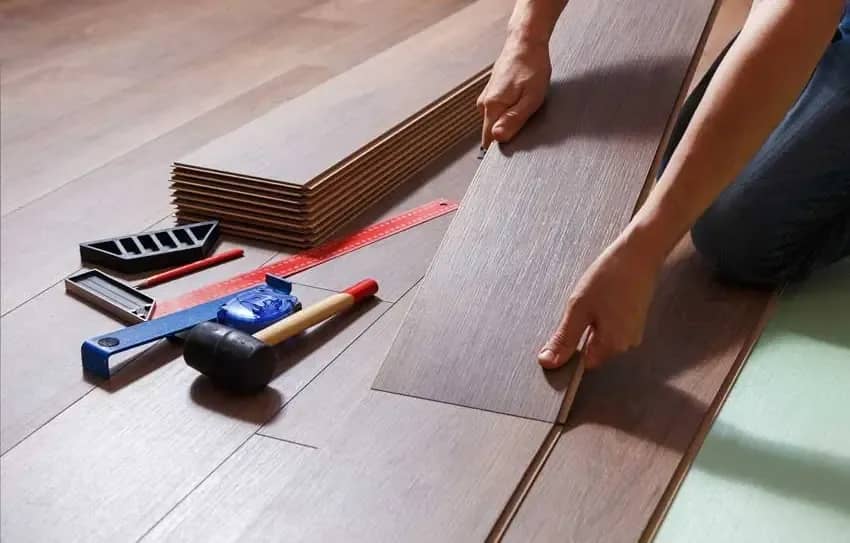
Uneven subfloors, rushed preparation, badly aligned boards and insufficient expansion gaps can create problems that have little to do with the material itself. This is one area where cutting costs too aggressively can backfire.
Professional installation can add to the budget, but it also helps protect the investment you’re already making in the flooring. If you’re considering DIY installation, make sure the product is suitable and that you understand the preparation requirements before starting.
Think About Resale, But Don’t Design Only for It
Flooring can influence how a home feels to future buyers, especially if it runs through large living areas. Neutral, well-maintained floors are often easier for buyers to imagine living with than highly specific finishes.
That said, it doesn’t make sense to choose something you dislike purely because it might appeal to someone else years from now. You’re the one living with it in the meantime.
A better approach is to choose a finish that suits your home, works with a broad range of interiors and feels durable enough to age well.
Cheapest and Best Value Aren’t the Same Thing
Flooring decisions become much easier when price is treated as one factor rather than the only factor.
Upfront cost matters, but so do installation, durability, water resistance, maintenance and how the flooring suits the way the home is used. Spending a little more can sometimes save money later, while in other cases a simpler product may be perfectly adequate for the space.
The goal isn’t to buy the most expensive flooring available. It’s to choose the option that makes the most sense over the years you’ll actually live with it.
For more practical reading, explore our home improvement ideas.
The weekly question
From obsession to clarity — one original question every week.
We answer one noisy topic at a time, in full. No daily roundup, no thread bait — just the question, the principles, and the system.