How to Protect Young Athletes from Recurring Joint Sprains Without Slowing Their Development
Young athlete joint sprains can become recurring injuries without proper recovery, bracing, and movement training during adolescent development.
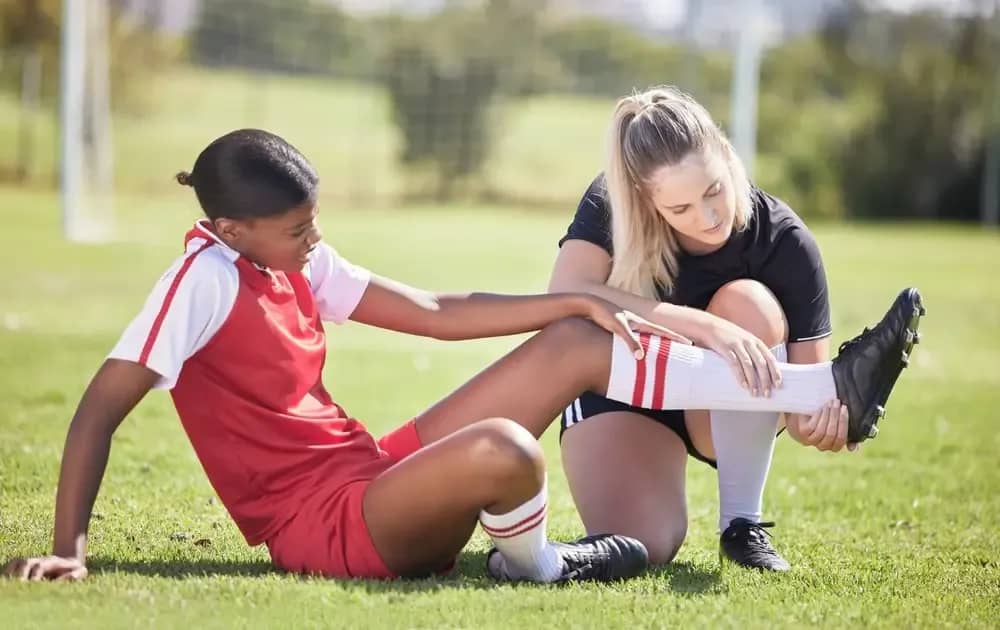
Roughly 3.5 million children and adolescents are treated for sports injuries every year in the United States alone. A significant portion of those injuries involve the same joints, the same athletes, and often the same lack of adequate follow-through after the first incident. Recurring sprains in young athletes are not just a nuisance. Left unmanaged, they can create lasting instability that follows a teenager well into adulthood.
This guide is for parents, coaches, and anyone working closely with young athletes who keep rolling the same ankle, jamming the same thumb, or nursing the same knee. The goal is practical: understand why adolescent joints are genuinely more vulnerable, learn how to read the difference between normal soreness and something worth taking seriously, and know when lightweight bracing and movement training can help rather than hinder development.
Why Adolescent Joints Behave Differently
Growth plates change everything. During puberty, the growth plates (the cartilage regions near the ends of long bones) are softer and more vulnerable than the surrounding ligaments and tendons. That means a force that would cause a ligament sprain in an adult can actually damage the growth plate in a teenager. The bone is the weak link, not the soft tissue.
There is also a timing issue. Bones often grow faster than the muscles and tendons attached to them during adolescent growth spurts. This creates temporary tightness, reduced flexibility, and biomechanical imbalance that increases injury risk. An athlete who was perfectly coordinated at twelve may feel awkward and injury-prone at fourteen, not because of bad habits, but because their body is mid-renovation.
The joints most commonly affected in young athletes are:
- - Ankle: Lateral ligament sprains from landing, pivoting, or uneven ground
- - Knee: Patellar instability or medial collateral ligament stress from contact and cutting movements
- - Wrist and thumb: Impact injuries from falls, ball sports, and contact sports, particularly thumb CMC instability
That last one gets overlooked more than it should. Thumb injuries in young athletes are frequently dismissed as minor, but the carpometacarpal (CMC) joint at the base of the thumb is under significant stress in sports involving gripping, catching, or bracing a fall. A clinically appropriate tool like the MetaGrip CMC thumb stabilizer brace is specifically designed for this joint and offers targeted stabilisation without limiting the finger movement a young athlete still needs.
Soreness vs. Injury: Reading the Signals Correctly
This is where parents and coaches make the most consequential decisions. Playing through soreness is sometimes necessary and appropriate. Playing through injury warning signs is not.
Here is a useful framework to guide those calls:
Normal post-activity soreness:
- - Develops 12 to 24 hours after activity (delayed onset muscle soreness)
- - Distributed across a muscle group, not localised to a joint
- - Improves with gentle movement and dissipates within 48 to 72 hours
- - No swelling, no bruising, no sharp or pinching sensations
Signs that warrant rest and assessment:
- - Pain directly on or inside a joint, especially at a specific point
- - Swelling that appears within hours of activity
- - A sensation of instability, giving way, or locking
- - Pain that worsens with light touch or weight-bearing
- - Any prior injury to the same joint that was not fully rehabilitated
The last point is critical. Incomplete recovery from an initial sprain is the single biggest predictor of a repeat sprain. Research cited by the Journal of Athletic Training consistently shows that athletes who return to sport before restoring full proprioception and strength are significantly more likely to re-injure the same joint. The issue is not that the ligament tears again. It is that the neuromuscular feedback system in the joint was never fully re-trained.
The Role of Bracing in Youth Sports: Support Without Dependency
There is a common concern among parents and coaches that bracing a joint will weaken it over time. The evidence does not support this fear when bracing is used appropriately as part of a structured rehabilitation and prevention approach.
The real distinction is between acute support and long-term dependency. A brace used during the return-to-sport phase after a sprain, or during high-risk activity while strength and proprioception are still being rebuilt, serves a legitimate protective function. A brace worn constantly as a substitute for rehabilitation is a different matter.
For adolescent athletes, the best bracing strategies tend to follow these principles:
- - Match the brace to the injury. A general compression sleeve is not the same as an anatomically designed stabilisation brace. For thumb CMC instability, for example, a specifically contoured support provides functional joint alignment in a way that a generic wrap cannot.
- - Prioritise low-profile designs. Young athletes are more likely to wear and comply with braces that fit under clothing, inside footwear, or do not visibly stand out. Lightweight, breathable materials make a real difference to compliance rates.
- - Set a clear endpoint. Bracing should have a defined role in the recovery plan, not become the default. Work with a physiotherapist or sports medicine professional to establish milestones that indicate when the brace is no longer necessary.
- - Use sport-specific bracing for high-risk activity. An ankle brace designed for basketball, or a thumb brace designed for contact sports, will allow the range of motion required for the sport while reducing vulnerability at the most stressed angles.
Movement Training as the Real Long-Term Solution
Bracing manages risk. Movement training eliminates it. These two approaches work best together.
Proprioception training, essentially teaching joints to sense position and respond quickly, is the most evidence-supported approach to reducing repeat sprains in younger athletes. The American College of Sports Medicine and numerous sports medicine bodies have endorsed balance and neuromuscular training programmes as effective injury prevention tools, particularly for ankle and knee sprains.
Practical exercises that make a difference at the adolescent level include:
- - Single-leg balance progressions: Starting with eyes open on a flat surface, advancing to eyes closed, unstable surfaces, and then ball-toss challenges
- - Lateral band walks and hip stability work: Knee and ankle vulnerability often traces back to hip weakness and poor lateral control
- - Landing mechanics coaching: Teaching athletes to land with soft knees, hip hinge, and weight distributed evenly rather than collapsing inward on the knee
- - Wrist and grip strengthening for upper-limb athletes: Forearm rotations, wrist curls, and pinch-grip exercises reduce both wrist and thumb injury risk in sports involving catching and contact
These exercises are not complicated, but they need to be consistent. Ten minutes built into a warm-up three times a week produces measurable improvement in joint stability over a six to eight week period.
When to Involve a Professional
Not every recurring sprain needs a specialist, but some patterns should prompt a referral without delay:
- - Any sprain where the joint gave way completely or the athlete could not bear weight immediately after
- - A third or subsequent sprain of the same joint within a single season
- - Pain or instability that persists beyond two to three weeks despite rest
- - Swelling that does not reduce within a week
- - A young athlete who reports constant worry about re-injury, which often indicates an unaddressed proprioceptive deficit
An experienced physiotherapist or sports medicine physician can assess joint laxity, identify underlying mechanical issues, and design a targeted rehabilitation programme. For hand and thumb injuries specifically, an occupational therapist with hand therapy experience is often the most relevant specialist.
Key Takeaways
- - Adolescent joints are more vulnerable than adult joints due to open growth plates and the timing mismatch between bone growth and soft tissue adaptation
- - Incomplete rehabilitation after a first sprain is the primary driver of recurrence, not bad luck
- - Bracing is most effective when it is joint-specific, low-profile, and paired with structured rehabilitation rather than used as a standalone fix
- - Proprioception and neuromuscular training are the most evidence-backed tools for preventing repeat sprains in young athletes
- - Knowing when to refer to a professional, particularly after multiple sprains or persistent instability, can prevent a minor recurring problem from becoming a long-term limitation
Frequently Asked Questions
- 1. At what age can a young athlete start using a supportive brace? There is no universal minimum age. The decision should be based on the injury, the joint involved, and the activity level rather than age alone. A paediatric physiotherapist or sports medicine professional can advise on appropriate brace use for younger children, particularly where growth plates may be a factor.
- 2. Will wearing an ankle or wrist brace make the joint weaker over time? When used appropriately during recovery and high-risk activity rather than as a permanent substitute for strength and stability training, well-designed braces do not cause muscular atrophy or weakness. The key is ensuring rehabilitation continues alongside any brace use.
- 3. How do I know if a thumb sprain needs a brace or just rest? Thumb sprains involving the CMC joint at the base of the thumb often benefit from stabilisation rather than complete immobilisation, particularly in athletes who need to maintain grip and hand function. If pain or instability persists beyond a week, or if the joint feels loose during gripping, a specifically designed thumb brace and professional assessment are both worth pursuing.
- 4. Is it safe for a teenager to return to sport while wearing a brace? In most cases, yes, provided the brace is appropriate for the activity and the athlete has regained sufficient strength and proprioception. A brace is not a substitute for readiness, but it does reduce vulnerability during the transition back to full activity.
- 5. What is the most commonly missed joint injury in young athletes? Thumb CMC joint injuries are among the most underdiagnosed in adolescent athletes, particularly in sports involving falls, rackets, or ball handling. They are often passed off as minor jamming injuries when the underlying ligament laxity can persist and worsen with repeated trauma.
Conclusion
Recurring joint sprains in young athletes are rarely just about bad luck or fragile bodies. They usually come down to incomplete recovery, inadequate neuromuscular re-training, and a return to sport before the joint is genuinely ready. The good news is that these are correctable patterns.
Getting the right support in place, whether that means a sport-specific brace for high-risk activity, a targeted exercise programme, or a timely referral to a physiotherapist, makes a measurable difference. Brands like Bracelab, which are built around clinically designed orthotic solutions, help athletes and their families embrace functional freedom without having to choose between protection and performance.
The athletes who recover fully and stay in the sport long-term are almost always the ones whose support network took the first sprain seriously enough to do the job properly.
The weekly question
From obsession to clarity — one original question every week.
We answer one noisy topic at a time, in full. No daily roundup, no thread bait — just the question, the principles, and the system.