How Diagnostic Tools Are Improving Hair Loss Treatment in India
Diagnostic tools for hair loss treatment in India are helping identify root causes, personalize care, and improve long-term regrowth outcomes.
Hair loss in India is no longer a problem people quietly accept. More people are asking better questions — not just "how do I stop this?" but "why is this happening in the first place?" That shift in thinking is partly being driven by better diagnostic tools that are finally making their way into hair care.
Why Generic Treatments Often Fall Short
For years, the standard response to hair loss was straightforward: use a minoxidil solution, take a biotin supplement, switch to a mild shampoo. Some people saw results. Many didn't. The reason this approach fails so often isn't because the treatments are bad — it's because they're being applied without understanding what's actually causing the hair loss.
Hair loss has more than twenty known causes. Hormonal imbalances, thyroid dysfunction, iron deficiency, chronic stress, scalp conditions, poor gut health, genetic predisposition — the list is long and the overlap is real. Treating all of them the same way doesn't make clinical sense, and yet that's exactly what most off-the-shelf solutions do.
The Role of Diagnosis in Modern Hair Care
In medicine, you don't prescribe without diagnosing. A cardiologist doesn't hand out blood pressure medication without first running tests. But in hair care, that step has historically been skipped. You walk into a store, describe your problem, and leave with a product.
What's changing now is the growing recognition that hair loss is a symptom, not the problem itself. The problem is whatever is going wrong underneath — in your hormones, your diet, your scalp health, or your genetic makeup. Diagnostic tools, both clinical and digital, are helping identify those underlying factors with more precision.
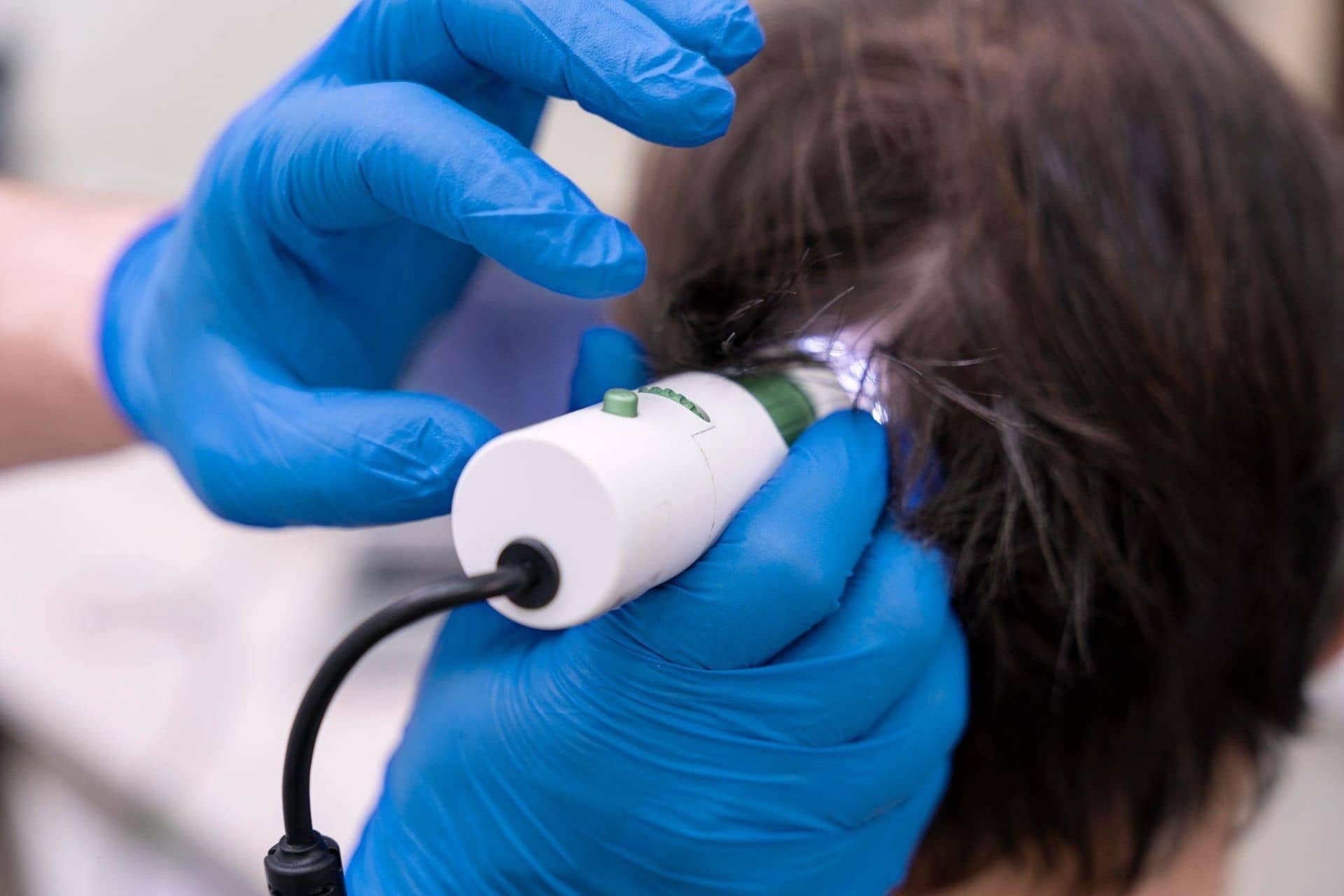
Trichoscopy, for instance, is a clinical imaging technique that allows dermatologists to examine the scalp and hair follicles at a magnified level. It helps identify conditions like androgenetic alopecia, alopecia areata, and scalp inflammation without needing a biopsy. Blood panels that measure ferritin, thyroid hormones, vitamin D, and DHT levels give a biochemical picture of what's driving shedding. These aren't new tests, but they're being used more systematically now in the context of hair loss.
Digital Assessment Tools and What They Add
Beyond clinical diagnostics, digital tools are also changing how people begin their hair loss journey. Online hair assessments, when built with enough depth, can surface patterns that a person might not have connected on their own — the link between chronic stress and telogen effluvium, for example, or the relationship between hormonal fluctuations and diffuse thinning in women.
This is where platforms focused on root-cause treatment have found an opening. The Traya hair test is one example of a digital diagnostic tool that maps a person's hair loss to specific internal causes before recommending a treatment plan. Rather than defaulting to a one-size-fits-all protocol, it uses inputs across health history, lifestyle, and scalp condition to narrow down what's actually going on.
The value here isn't novelty — it's direction. Knowing whether your hair loss is primarily hormonal, nutritional, or stress-related changes what you do about it significantly.
Understanding the Gut-Hair Connection
One area where better diagnostics have shed light is the relationship between gut health and hair loss — something most people haven't heard about. The gut plays a role in absorbing nutrients that hair follicles depend on: iron, zinc, B12, and biotin. If there's poor gut absorption, even a nutritionally sound diet may not be delivering what the follicles need.
Identifying this kind of issue requires looking beyond the scalp entirely — at digestion, bloating patterns, food intolerances, and gut microbiome health. Standard hair loss consultations rarely go there. Thorough diagnostics do.
What This Means for Treatment Outcomes
The improvement in diagnostic thinking isn't just academic. It has real consequences for results. When a treatment plan is built on accurate root-cause identification, the chances of meaningful hair regrowth improve considerably. Timelines become more realistic. Patients are better informed. And there's less money wasted on treatments that were never going to work because they were targeting the wrong cause.
Final Thoughts
Hair loss treatment in India is at a turning point. The tools available today — both clinical and digital — make it possible to understand hair loss with a level of specificity that wasn't practical even a decade ago. The shift toward diagnosis-first thinking is likely the most important change in this space, because treating the right problem is always more effective than treating a symptom.
The weekly question
From obsession to clarity — one original question every week.
We answer one noisy topic at a time, in full. No daily roundup, no thread bait — just the question, the principles, and the system.