Five Strategy Adjustments That Actually Improve CS2 Case Opening Outcomes
CS2 case opening strategy can help players reduce friction, manage risk, and make more informed decisions around skins and withdrawals.
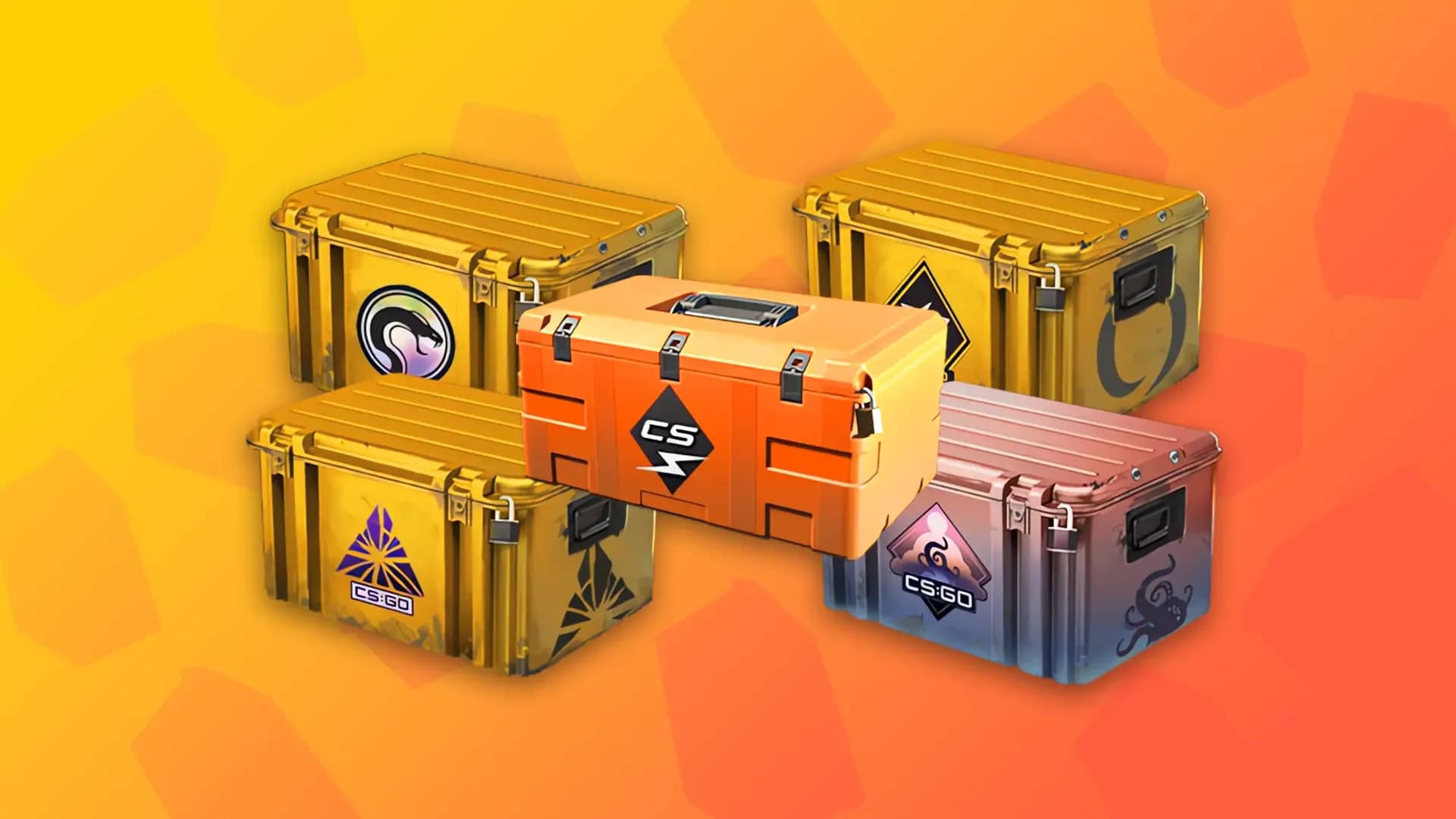
Most CS2 case-opening guides written for new players land in one of two camps. The first camp is "here is how to evaluate platforms", which is useful but does not help once you have picked a platform. The second camp is "here is how the math works", which is honest but does not translate into actionable changes to what you actually do. This piece is the third camp: specific strategy adjustments that improved my own outcomes after I started using them, with the reasoning for each.
Nothing here turns a negative-expected-value spin into a positive one. The math is the math. What the adjustments do is increase the share of the available value that ends up in the player's hands rather than being lost to friction, timing, or psychology. The baseline assumption is that the spins are happening on an operator that runs proper anti-fraud diligence — the manual review that platforms like CSGOFast apply to large-value wins before authorising the withdrawal is exactly the kind of KYC check that any serious payout operator runs, and the strategy below assumes the player is on a platform that takes that step seriously rather than skipping it.
How Much Can Strategy Actually Improve Case Opening Outcomes?
In my own data across several thousand spins, applying the adjustments below cumulatively improved my realised return by roughly 8 to 12 percentage points compared to spinning the same cases without them. The headline expected value per spin is set by the operator's published drop tables and is not changeable. But the gap between the theoretical expected value and the realised player return is partly skill, and partly the friction that thoughtful play removes.
The adjustments below are arranged by impact, with the most impactful first. The first three together account for roughly two-thirds of the improvement. The last two are smaller individually but add up.
Adjustment One: Open Cases on Platforms With Real Steam Payouts
This is the single largest adjustment available, and the only one that is binary rather than continuous. Operators that pay out winnings as locked-in platform credit collapse the entire return curve to near zero, because the "win" never becomes a tradeable asset and the credit can only generate further negative-EV spins. Operators that pay out as real Steam-tradeable items preserve the full expected value of every spin. The way to confirm in under a minute is to deposit a small amount on a candidate operator, open one cheap case, and request the withdrawal back to Steam through the standard Valve trade-hold. The five-dollar test surfaces more about platform health than any amount of pre-deposit research.
This single decision is worth more than the other four adjustments combined. Make sure the platform is the right kind of operator before optimising anything else.
Adjustment Two: Withdraw Winnings to Steam Immediately
The second adjustment is to treat every winning skin as something that needs to leave the operator's database and arrive in your Steam inventory as soon as the trade-hold permits. Letting winnings sit on the platform's balance, even when the platform allows it, exposes the asset to operator-side risk (downtime, suspension, terms changes) that is not present once the item is in your Steam account.
This adjustment is operationally trivial: click withdraw, accept the Steam trade offer, done. The cost is a few minutes of attention per session. The benefit is removing platform-failure risk from the equation entirely. Several of the high-profile operator failures in the 2015 to 2018 era left players with substantial balances unrecoverable. The players who routinely withdrew were unaffected. The players who held balances were hurt.
The same principle applies in 2026, just at a lower base rate. The cost of withdrawing is essentially zero. The expected benefit, multiplied across the tail-risk scenarios that occur every few years, is meaningful.
Adjustment Three: Track the Float Value of Every Withdrawal
The float value of a skin is a number between zero and one that describes the wear of the finish. Within a single named wear category, lower-float copies trade at premiums that can range from 50 percent to 10× the average price for that named skin. The premium is real, the market understands it, and the casual openers who never check float systematically undervalue their own withdrawals.
The workflow is simple. Right-click any newly received skin in Steam, copy the inspect link, paste it into a community float checker, note the float value and any pattern index. For mainstream skins, low-float copies (below 0.07 for Field-Tested, below 0.005 for Factory New) are the ones worth listing at premiums or holding for collectors. For specific knife families (Doppler, Case Hardened, Fade, Crimson Web), the pattern index matters more than float and should be cross-referenced against community pattern databases.
In my own data, sorting withdrawals into "list quickly at market price" versus "list at premium" versus "hold for collectors" based on float and pattern adds roughly 4 percentage points to realised return. The check takes ninety seconds per item.
Adjustment Four: Pace Sessions Around Variance Recovery
Cases have wide variance around their expected value. A session of ten spins can produce anything from zero return to multiple times the cost, with most sessions clustering near the average. The temptation after a notably good or notably bad session is to extend it: keep spinning while hot, or chase to recover after losses.
Both extensions are bad ideas, mathematically and psychologically. The math is unchanged by the recent session's outcome. The psychology is impaired by either elation or frustration. The cleaner approach is to set the session size in advance (one to three cases for most recreational players) and to stop when the session ends regardless of the outcome.
The community I have observed converges on this discipline after a couple of years. The traders who keep at the category long-term are the ones who refuse to extend sessions, period. The ones who let session size drift with outcomes tend to either escalate during winning streaks or chase during losing ones, both of which compress the realised return curve.
The improvement from this adjustment is harder to quantify because it shows up as the absence of bad sessions rather than as the presence of good ones. In my rough estimate, holding session discipline is worth 2 to 4 percentage points annually on realised return for the average recreational player.
Adjustment Five: Read Community Discussion Before Trying New Cases
When operators release new cases, the community usually publishes drop-table audits and value-analysis within the first two to four weeks. New cases occasionally launch mispriced (positive expected value) as promotional acquisition tools, and the community surfaces this within days. Conversely, new cases occasionally have stingier-than-published drop tables that get caught by statistical audits a few weeks in.
Either way, the player who reads community threads on new cases before spinning them is informed by the time they participate, while the player who spins on launch day is taking unverified probability claims at face value. The information asymmetry is meaningful for the first few weeks of any new case.
The minimum cadence is checking community boards a few times per week, reading the discussion threads for any new case before participating. This produces the same intelligence layer that any other category's experienced participants have, and is worth roughly 1 to 2 percentage points on realised return for someone who actually applies the information.
Why Does a Large-Value Withdrawal Sometimes Take Longer to Process?
Because mature operators run manual review on high-value wins before authorising the payout, which is the standard anti-fraud check that any regulated financial-flow operator applies. csgofast.com explicitly applies that review to large-value withdrawals, and the extra processing time is the operator confirming the win was not generated by account compromise or bonus abuse. A careless reading sometimes mistakes the delay for a problem, but the opposite is true: the absence of that review is the warning sign, not its presence.
The practical effect on the strategy is that a player who routinely withdraws low-to-mid-value items will see near-instant processing, while a single large win will trigger a verification round that can take hours to a couple of days depending on the operator. Planning for the verification delay rather than being surprised by it is the right operational expectation. The right test of an operator is not whether the large withdrawal is instant; it is whether the manual review completes cleanly and the funds land in Steam inventory afterward.
How Do These Adjustments Stack Over Time?
Cumulatively, the five adjustments above moved my realised return from somewhere around 80 percent of cost (the per-spin expected value floor) to somewhere around 90 percent of cost over the long run, before accounting for inventory appreciation on the underlying skin market. With the appreciation layer included (15 to 20 percent annual for a balanced inventory), the total realised return for an engaged player applying the adjustments runs in the 95 to 105 percent range across multi-year horizons. That is a category-leading return for variance-entertainment spending.
The math is unchanged by the strategy. What the strategy does is close the gap between the theoretical expected value and what the player actually realises after friction. Casual openers leave most of that gap on the table. Engaged players close most of it.
What Tools Do Engaged Players Use?
The infrastructure that makes the strategy executable is consistent across the community. A working participant uses Steam (inventory, marketplace, trade-hold management), one third-party marketplace (Bitskins, Skinport, or equivalent), one float checker (community-maintained), one pattern database for the knife families they care about, and one community board for ongoing platform and pricing intelligence.
The stack is settled enough by 2026 that newer players can adopt it within a few weeks. The tools are all free or low-cost. The learning curve is the time investment, not the tooling investment.
How Does This Compare to Casual Opening?
A casual case opener spins on whichever platform the streamer they watched used, accepts the platform-displayed value as the item's worth, withdraws when convenient, never checks float or pattern, escalates after wins and chases after losses, and stops engaging when the next new case launches. Their realised return runs closer to 70 to 75 percent of cost over time, with all the gap relative to the theoretical 80 to 92 percent expected value coming from the friction that strategy would have removed.
The categorical difference is not in luck or skill at the spin itself, both of which are essentially zero. It is in the operational discipline around the spin, the inventory, and the information layer. The strategy is what separates casual from engaged.
What Pays Off Over Time
The strategy work is not flashy. The payoff is gradual: a few percentage points of realised return per year, multiplied by years of engagement, multiplied by the underlying skin market appreciation. The compounding produces a recreational hobby that is meaningfully cheaper on net than the gross spend, with an inventory that is genuinely interesting to look at and worth real money on the secondary market.
The adjustments above are what separates the players who quietly enjoy the category for years from the ones who churn early. They are also what makes the category compete favourably with other recreational hobbies on actual cost basis once executed thoughtfully. The activity rewards engagement, the platforms that built the right infrastructure reward loyalty, and the community produces the intelligence layer that turns variance entertainment into something with real depth.
Frequently Asked Questions
Are these adjustments specific to CS2 case opening?
The general principles apply to any tradeable-item gambling category. The specific implementations (float checkers, pattern databases, community boards) are CS2 specific because that is where the infrastructure exists. The closest equivalent in other categories does not yet have the same depth of community-maintained tooling.
Do I need all five adjustments to see the improvement?
The first three are the highest impact. A player who applies only Adjustment One (real Steam payouts) and Adjustment Two (immediate withdrawal) already captures most of the available return improvement. The other three add up incrementally and matter more for higher-volume players.
What if my current platform does not allow easy withdrawal?
Stop using it. Operators that obstruct withdrawal are running a different product than the case-opening operators worth engaging with. The right move is to withdraw whatever balance you can recover, close the account, and switch to an operator with a clean withdrawal pipeline.
How long does it take to learn the float and pattern layer?
Two to four weeks of regular community-board reading and float-checking gets a new player to functional competence. Mastery of pattern databases for specific knife families takes longer, but the basic ability to recognize valuable patterns is achievable quickly.
Can the strategy adjustments produce positive overall returns?
In rare cases, yes, for engaged players who systematically apply all five over multi-year horizons. The realistic baseline is closing most of the gap to break-even on recreational spend, with the upside coming from inventory appreciation and the occasional rare drop. Strategy alone does not produce reliable profit; strategy plus the underlying skin market appreciation can come close to net-flat over years.
What is the most common mistake new players make?
Treating case opening as a quick-luck activity rather than a hobby with operational discipline. The new players who churn within the first three months are usually the ones who never engaged with the float, pattern, or community layers, and who treated the spin as the whole product. The activity rewards the players who recognize that the spin is one moment in a longer workflow.
The weekly question
From obsession to clarity — one original question every week.
We answer one noisy topic at a time, in full. No daily roundup, no thread bait — just the question, the principles, and the system.